Unknown's avatar

How to Prevent Your Work From Impacting Your Health

We like to think that our jobs are good for us, but the reality is a little more complicated. While they can provide an income, they can have a negative impact on our health. That’s because, though we have some say in what we do, the working conditions are dictated by someone else; we’re not entirely (or probably even remotely) in charge of our working conditions. While you can’t change your career at the drop of a hat, you can take steps to protect yourself from potentially harmful aspects. We take a look at a few of these below. 

Pexels – CC0 Licence

Get Mobile

We tend to think that how we live is normal or natural, but in actual fact, the way we live would be considered pretty strange by our ancestors. The biggest thing they’d notice is that we’re so much less mobile than we were in the past. We’re always sitting down! And though it might seem comfortable, the truth is that it can have a negative impact on our long-term health. If you’re driving to work, sitting down all day, and then crashing on the couch each night, look at making some changes. Cycling to work and taking walks throughout the day will make a big difference.

Computer Safety

It’s true that working conditions are much safer than in the old days, because many fewer people are using heavy machinery. Yet, while the immediate risks of working at a computer aren’t that great, they can have a negative impact on your health. For example, you could develop RSI (repetitive strain injury) in the wrist from typing too much. And then there’s the matter of eye strain and the potential threats of blue light. In general, it’s best to monitor the effect that working at a computer has on your body and mind, and make adjustments as necessary.

Work-Related Stress

Your job will provide you with an income, but it sure can be stressful from time to time. And stress doesn’t just spoil your day: it can have a long-term impact on your health. As such, it’s best to find ways to deal with stress before it builds up to a problematic degree. One way to do this is to meditate each day — it only takes ten minutes but can have a profound impact on your overall ability to manage the more stressful side of life. 

In the Workplace 

Also, be sure to take a look at your workplace and identify any risks. Loose cables, clutter, and poor lighting can all lead to trips and falls, which can, of course, greatly compromise your health. It might not look like it, but it really is possible to have accidents in an office environment.

Regular Breaks 

Finally, even if you think you love your job, it’s still important to take regular breaks from time to time. Sometimes you won’t be aware of a particular health issue until you take a couple of steps back, and can see your situation with more perspective. 

Contributed Post.

If you like what you’ve read here, please let others know of this post, blog, and site.

And thanks for reading!  🙂

Unknown's avatar

6 Ways To Improve Your Mental Health

We read a lot of articles about how to take care of our bodies. We listen when the hairdresser begs us to stop bleaching our hair, and we go to the dentist with relative regularity to keep our teeth in good shape. The one area of our health that we all seem to struggle with listening about is our mental health. People don’t tend to listen when they’re told to slow down and take their time with life, and that’s because there is a lot of pressure. We have work pressures, family pressure, social pressure – it’s a lot.

You should be able to feel healthy on the inside, mind, and body, and that starts with taking care of your mental health and realizing when things get too much for you to handle. You have to consider how you take care of your physical health to know how to take care of your mental health, too. So, if you go to the doctors with pain or aches, you should do the same when your brain needs help. If you choose to spend money on Invisalign to improve your teeth and make your confidence soar, then you should also go to a therapist and talk it out when life is getting a little too hard. When you feel low, you need to start taking care of your mind and unpack the things that are impacting your mental health. So, let’s check out six things that you can do for yourself to improve your mental health.

Woman Holding a Smiley Balloon

Image Source

Calorie Deficit & Get Your Steps In

Sometimes, eating well and moving as much as you can is enough. When you eat well, your energy levels shoot up, and you start to feel fantastic on the inside. A diet rich in fruit and vegetables is a diet that will have a long-lasting effect on your mental health. Getting your steps up? Well, we all know the benefits of a pleasant walk. Being in the fresh air and in nature can make a massive difference to your mental health. Not only will you be able to feel healthier and more energetic, but you’ll also be pushing yourself out of your comfort zone and out of your house at the same time.

Maintain Relationships

Connections matter and there are plenty of studies to show how isolated people can feel when their mental health is working against them. The best thing that you can do to improve your mental health is to connect with others. The people in your life that want to see you happy and strong are going to be around you to try to enrich your life. Let them do it. On the days you don’t want to see people, try to push yourself to see them and avoid the isolation that mental health issues promise you.

Laughter: The Language Of The Soul

It doesn’t matter how big or small it is, find something to laugh at. You can set aside time every single day to feel good, and it starts with the hobbies and activities that you set for yourself. Let yourself embrace the joy in the small things and smile. Sometimes, it takes smiling and laughing to be able to feel that same joy you’re trying to find.

Don’t Hide Your Feelings

We mentioned a therapist earlier on for a reason. Whether you choose to talk to a therapist or to your family, you need to keep your feelings on the table. People need to know that you are struggling, and the only way to show them that you are in pain is to stop hiding the way that you feel and be open. It isn’t easy to talk, but it’s good to do it. If your friends and family know you are struggling, they’ll be able to support you better and make you feel safe.

Meet A Goal

The sense of achievement that you can get from hitting a goal can be everything that you didn’t know you needed. It doesn’t matter what the goal is or how big it is; it’s going to be a momentous occasion if you stick to it.

Sleep

A good night of proper sleep is going to do you and your mind a world of good. Sometimes, just the act of getting to bed on time each night (we mean 10pm, not 3am) is a big deal. Take baby steps and start by setting up your sleep environment. Once you’ve got those layers of bedsheets and pillows ready, set yourself an alarm a little earlier each night to get to bed on time. Eventually, you’ll be getting the sleep that you need.

Contributed Post.

If you like what you’ve read here, please let others know of this post, blog, and site.

And thanks for reading!  🙂

Unknown's avatar

Common Ways People Try To Save Money That Isn’t Good For You (And What You Should Do Instead)

Pixabay – CC0 Licence

Ask anybody in the modern-day if they’ve got problems with their finances, and the likely answer is that they most definitely do. We’ve all got our crosses to bear, whether it’s with regards to debt or we are trying to buy a house. When we look at the factors that result in so much debt, we have to take into account the stress is associated. Some people feel that they’ve got to cut so many corners in order to live a comfortable lifestyle, even though on the surface they are earning more than enough, but there are so many people that have no choice but to cut corners in order to sustain their current lifestyle which can have a major bearing on their health and happiness. What are some of these components that seemingly well off people need to undertake in order to keep their finances afloat? And if you are struggling, what can you do to ensure that you make life easier for yourself in a financial sense but also not feel the burden of modern-day money stresses?

Cutting Back On Insurance 

Many people feel that insurance is one of those things that you’re paying out for, but you never end up using it. When you are considering just how much of a difference it could make to your lifestyle, cutting back on a monthly payment for your insurance policy, whether it’s car insurance, life insurance, or even insurance for your worldly possessions it’s hardly a surprise that when people are struggling that this is one of the first things to go. But we’ve got to think about the overall repercussions of not having insurance. For example, driving without insurance is such a cardinal sin that you could pay the price, literally and figuratively, in a legal sense. Cutting back on insurance when you are trying to save money in terms of your home or are attempting to fix up your home as an investment could mean that you will suffer a burglary or an accident if it is not covered by insurance. The fact of the matter is that insurance is so important that it’s got to be one of the key expenditures in your life. It’s there should the worst-case scenario happen.

Going Without Food 

There are so many tales of families that are going without specific provisions so their children can go to school with full bellies. As sad as this is, it’s more widespread than you think. Many families feel that they’ve got to go without a meal and when we look at places like the UK who are suffering unprecedented amounts of austerity, the increase in food banks, where people go and get provisions that have been donated by other people, is on the up. But going without food means that we are putting our health at risk. If you feel that in order to make ends meet that you’ve got to go without food, partly this can be to do with the type of food you are used to but you can also figure out ways to make food go further. Something like batch cooking is a very good way to expand your provisions. Nobody should go without food. But the reality that many families are considering this is a stark truth that is hitting home to many people.

Not Earning Enough Money

Everybody feels that they are getting enough money in order to sustain a certain lifestyle. We all feel we could do with a pay rise, and the fact of the matter is that people are looking at side hustles or an extra job to acquire additional income means that we’ve got to be smarter with the money we have. When we’re trying to save for a house, one of the most challenging components is minimizing your debt. When we don’t earn enough money, we lean on credit cards too much in order to pay bills or just to get by from month to month. When we don’t earn enough to sustain our lifestyle, this is when we have to make alterations to our daily lives. There are so many resources out there that can help with this, such as the budget calculators you see online. Taking a long hard look at your incomings versus outgoings can be a complicated conversation to have, especially when you have dependents. But as we begin to unravel our lifestyle and see what we’re doing is harming us in the short-term, then we can start to make changes for the better.

The Temptation To “Keep Up With The Joneses”

We live in an age where we can get material goods on tap. We can order something online and within 12 hours, it’s in our hands. And when we live in such an immediate culture, the temptation to order things so quickly means that we end up paying the price. We’ve also got to think about the social implications of having things. While there is a leaning towards minimalism in some areas, when you live in in a neighborhood that looks affable, where everybody is driving a nice car, and appear to go on family trips all the time, this can send a message to us that we’ve got to keep up with them in one way or another. But this pressure results in unprecedented stress. When we are in a stressful environment where we feel that to maintain some sort of pretense we’ve got no choice but to spend money, we lose track of our abilities to control our incomings and outgoings. The first port of call can be to inquire about a pay rise or to earn more money, but when we increase our earnings to match our lifestyle, our expenditure begins to expand further out. This is a sign that we are never content with where we are. It’s a psychological problem rather than a physical one. By looking at your mindset and beginning to understand where your problems lie, you can start to make peace with the fact that money isn’t everything. Yes, it’s a cliche, but we’ve got to remember that when we only earn so much, we’ve got to stay within our means. Because we can feel that pressure with friends that have earned more over the years, trying to catch up stops us from focusing on the things that matter.

Dealing With Financial Stress

Because we live in an age of rising costs, we start to feel that we have no option but to fight against the rising tide. We only earn so much so we “put up with it,” and we think that because there’s only have one life to live that we should make the most of it. Some people say that it’s “only money” and this is a dangerous mindset, but we can all understand where they come from. It’s about not letting financial stress envelop your entire life; it’s about being happier despite the circumstances. We all suffer from some sort of financial burden. Whether we’re trying to save up for something, or we can feel that we don’t earn enough day-to-day. But when we start to address our earning potential in comparison to our learning power, we can begin to make better habits, not just in terms of spending money but in terms of how we live our lives. Some people can’t bear the idea of looking for bargains because it feels like a step down, but we’ve got to remember the important thing that learning a habit takes some time. It can take at least 8 weeks to set in. When you’re used to a particular way of life and having to cut back on your outgoings and it feels like you are depriving yourself, it’s important to remember that whether it’s trying to save money or keep up with the Joneses that a lot of people are feeling the pinch. They just feel it differently to you. They may have a fantastic house, but they may still buy their furniture off Facebook Marketplace. And this is something we’ve got to think about. Material goods aren’t the be-all and end-all, and for those people that are trying to acquire material goods in order to feel better or live a better life are feeling the pinch in a similar way.

The stress of living in the modern-day means that we feel we’ve got to treat ourselves. But it becomes a very vicious cycle when you begin to treat yourself to something because it’s a Friday and then you feel so stressed by Monday morning that a little treat would benefit you again. Not that we’re saying you need to deprive yourself but you’ve got to understand the repercussions of your actions. It’s something that we all suffer from now. Learning to save money can seem impossible when there are mounting bills. The cost of living is increasing, but the pay is not matching it. So tightening our belts becomes the default option. But this means that we get stressed and we lash out at the people we love. Perhaps in order to live a happier life, we’ve got to understand that when we reduce our material goods we don’t necessarily feel worse off. Whether you have got children that have peer pressure in order to have the latest toy or you live in a neighborhood where you appear to be the poorest person, the fact of the matter is that you’ve got your own life to lead rather than comparing yourself to others. And perhaps this is the key to feeling freedom in an emotional and financial sense.

Contributed Post.

If you like what you’ve read here, please let others know of this post, blog, and site.

And thanks for reading!  🙂

Unknown's avatar

3 Reasons To Start The New Year With A Psychic Reading

Photo by Scott Rodgerson on Unsplash

Every New Year brings about an increased sense of hope, with as many as 60% of people making New Year’s resolutions that will, if achieved, make them better versions of themselves. Despite only 8% of those who make resolutions actually achieving them, many more enjoy a spiritual awakening of sorts that affords them valuable insight into themselves. It is also during this period that an increasing number of people seek out psychic guidance to help them prepare better for the year ahead. While there are almost countless reasons to get a psychic reading done, some are substantially more popular when a new year is about to commence.

Enjoy improved mental well-being

Apart from being a time of hope, the start of a new year can also be exceedingly stressful. Obtaining a psychic reading can ease your anxiety and stress in many ways. Speaking to a psychic allows you to release all your emotions without fear of judgment. A reading can also help you develop a habit of introspection while encouraging you to trust your own intuition. A psychic reading may also help disperse a lot of doubt you may have had about the future, rendering your insecurities powerless and providing you with the motivation to start the new year filled with self-belief and optimism.

Receive affirmation of your capabilities

For many people, a new year also signals new beginnings in terms of employment. A psychic reading may not be able to tell you what the right job for you is, for instance, but it can give insight into whether it is the right time to make a significant adjustment career-wise. A reading can also help you discover new talents and suppressed passions, which can steer you in a new and exciting direction. Before making any decisions with regards to your career that you may regret later on, have a look at possible physic readings in the area that can help you gain the necessary insight needed to make an educated and responsible decision.

Understand your relationships

When a new year is upon us, we naturally seem to become more open to the possibility of either forging new relationships or making significant changes to our current ones.  People who are single may become increasingly eager to meet their soul mate, while those in a happy, long-term relationship may start thinking about marriage. A psychic reading, and especially one that is conducted face-to-face, can help you understand relationship dynamics a lot better. Even just one small revelation can trigger immense life changes, whether in the form of a more positive outlook on life in general, or as new-found confidence to pursue love with an open heart and open mind.  

While a psychic reading is unable to pinpoint exactly how the year ahead will pan out, it can offer some very valuable insight and guidance. By combining what you have learned during a reading with your own expectations for the new year, you may very well find that the year ahead will be one of the best you have ever had.

Contributed by a freelance writer.

If you like what you’ve read here, please let others know of this post, blog, and site.

And thanks for reading!  🙂

Unknown's avatar

The Secret Worries Men Have: Some May Surprise You

Women can openly talk about their worries. How do they do that? They have no issues with getting their girlfriends together. Discussing body parts, sex issues and everything in between. Men? We struggle to talk about some of the serious stuff. We spend more time worrying in secret than we do discussing the problems and finding a solution. Here are the secret worries of most men. You may worry about them all, or a few. Either way, the message is stop doing it in secret and talk to someone. 

Image source – Pixabay – CC0 License

Weight

It’s not just women who wonder about their weight and look at how to lose unwanted pounds. Men are just as conscious about it. But don’t voice their concerns. Things like “Moobs” which is additional body fat in the pectoral area are one of the biggest weight concerns of men this decade. We worry about how to lose weight. How to keep it off. If the loved ones in our lives will still find us attractive with a bit of weight around our middle area. If it worries you that much, don’t let it turn into more of a problem. Discuss your insecurities with your partners and perhaps look into a change of diet and regular exercise. 

Anxiety and depression

It is more common than we realise for men to struggle with things like anxiety and depression, but yet it is still seen as a taboo subject today. Depression can come in all different ways and can stem from the workplace, your relationship or how you feel about yourself and your own self-esteem and confidence issues. Anxiety can also be part of this, or a mental health struggle in its own right. There are many things you can try, herbal remedies where you can click here for more information. Talking therapies where you can work on that inner conversation that you have with yourself. Even just admitting there is an issue can be a huge positive step in the right direction to help you on the road to recovery. 

Being a good father

Why men worry about this in secret is bizarre as only sharing this with your family would put your mind at rest straight away. It’s very healthy to fear your performance as a dad. That is one of the reasons you are a good father. Everyone worries about whether you are doing things right. Women will quite be quite happy to discuss this whereas men shy away from the subject. Just be assured that if this is a worry, then you are doing a great job. 

Hair loss

Men can spend too much time worrying about things like hair loss. When it is something that can’t be helped unless you look at treatments. The best advice would be to embrace your new image. 

Being too feminine 

Finally, would you be shocked if I said men worry about being too feminine? It’s true. Some men worry about enjoying fine wines and chocolate. Watching soppy films. All could make them look womanly and that they lose their masculine edge. 

So there you have it. The secret worries that most men never talk about. However, talking about these things could make the worry go away. 

Contributed Post.

If you like what you’ve read here, please let others know of this post, blog, and site.

And thanks for reading!  🙂

Unknown's avatar

Three Step Remedy to Keep Your Spirits High During the Holidays

Originally posted by Silvernest Team on Nov 28, 2016

Three Step Remedy for the Holidays

The holiday season has arrived once again. While it can be a magical time with colorful lights, festive parties and gift exchange; it also can trigger feelings of grief, loneliness or generalized depression. This is not uncommon as baby boomers get older and become empty nesters, widowers or are long time single. This year, try our three-step remedy to explore your greatest talents and passions, and use them to create community and philanthropy as a great way to enliven the holidays.

In fact, if want to do something more ambitious in terms of philanthropy, you may even think about how to start a nonprofit, which by itself will raise your spirits as well as those it will help.

Let’s get started!

A little self-exploration is a great way to gain powerful insights, and will naturally inspire you to engage and give. Begin by take an inventory of all the things you love to do. Take a moment to sit down at your table with a piece of paper, a pen and a cup of coffee or tea. Before you start – sit back, close your eyes and settle your mind.

Allow yourself to imagine a perfect sunny Saturday.

You have no chores, no obligations, and four hours to do whatever you want.  Ask yourself, What would I most want to do with this glorious day?” And then wait while various alternatives float to your mind. Write them down.

For some, the answer is as simple as taking a bath or reading a book. Others come up with golfing, taking a hike in Nature, working in the woodshop, or looking for shells on the beach. For others, it is making something artistic, cooking, or going shopping.

The answers you come up with are important, and often require little to no money. These ideas reflect the areas of life that gives you the most comfort and joy (to borrow from a famous Christmas carol). This is important, and can be a foundation of how to expand those things you love into a tool for engaging with others.

If doing something artistic was the top of your list- that is a powerful clue.

  • Explore: how can you expand your love of art into something bigger?
  • Engage: deepen your skills by taking a class. Not only will this sharpen your skills, but also introduce you to others who share the same passions.
  • Give: now, use your art to make small gifts (ornaments, cards, toys) and give them away to friends, a school, or a homeless shelter.

My grandfather was one of the happiest people I knew. He loved people, and would always fill his pockets with hard candy and give out a piece to everyone he met. He was someone who could never sit still and had endless talents. Well into his 90’s, he continued to explore, engage and give. When he could no longer work in his shop, his last years were spent wrapping coat hangers with yarn (keeps the shirts hanging nicely) and gave away hundreds to his children, grandchildren, and staff at his assisted living facility. He was adored, and never was without a smile.

The experience of loneliness is one of the most powerful signals from our bodies to act. There is a big difference between loneliness and depression, although they are often diagnosed as one. Feeling lonely is simply information- time to get out! Try this three-step remedy and see what happens.

Explore your passion more deeply, engage with others who share your interests and then give away our time, talents or gifts to others.

Children do this naturally. They may make pot holders, paint pictures or cut out paper snowflakes and then happily give them away without another thought. ‘Tis the season of sharing, caring and reciprocating. Come on in and join the fun!  What are some of your passions and interests that you have turned into tools to create community and philanthropy? We’d love to hear your stories on our Silvernest Facebook page. Join us and happy holidays!

Contributed Post.

If you like what you’ve read here, please let others know of this post, blog, and site.

And thanks for reading!  🙂

Unknown's avatar

Reasons Your Mental Health Isn’t Improving

person holding white printer paper

https://unsplash.com/photos/fZ2hMpHIrbI

Mental health is currently an epidemic that is causing a generation of teens and adults a lot of trouble. Thankfully, the stigma surrounding it has eased recently, and now people are more willing to discuss their issues without the fear of their friends and family avoiding them. 

However, coping with mental health is not done when you acknowledge you are struggling; it is only the beginning. It might be that you are currently undergoing treatment for depression, anxiety, or stress but are not seeing the results you hoped. It could be the treatment is not right for you, but there are other reasons your mental health is not improving. 

You Aren’t Taking Advice On Board

You can attend all the therapy sessions you like and talk to professionals until you run out of things to talk about, but if you neglect to take on their advice for improving your mental health, then you will not see the improvements you hope for. 

Taking this advice on board is crucial to helping you recover, even if it doesn’t work. Regardless of its success, you’ll be able to find a treatment that does work, which could allow you to feel better sooner. 

You Are Holding Onto Existing Crutches

Part of recognizing mental health issues is discovering what crutches and habits are causing the problem. These issues could be a variety of things, including pornography addiction, smoking, or a harmful social media habit. 

It’s difficult to remove these habits from your everyday routine, but if they are proven to have a negative impact, then distancing yourself from them is one of the first steps towards improvement. There might be times where you falter, but this is just part of the process, so keep on trying until it sticks. 

You Aren’t Treating Your Body Well Enough

Whether it’s diet, exercise, or sleep, a healthy mind is made better by a healthy body. It’s understandable not to have the motivation to go to the gym, cook healthy meals, or get to sleep at a reasonable time when your mental health is affecting you, but you need to try. 

To overcome this, try setting up routines that ease you into better habits instead of throwing yourself into unsustainable expectations. Start small and allow your routine to grow from there, and soon you will manage to take better care of your body. 

You Aren’t Getting Out There

Isolating yourself from friends and family often seems like the best way to cope with issues, especially if you feel you don’t want to burden them with your problems. However, keeping yourself away from others who care about you means you are often trapped with your own thoughts, which can have adverse effects on how you feel. 

Fixing to Change

You cannot expect to get better unless you dedicate yourself to making changes to your life that will benefit you. It is not enough to seek therapy or take medication; there needs to be a conscious effort from you to tackle your problems. Consider these reasons why your mental health isn’t improving, and see if making changes related to these has a positive effect on how you feel.

Contributed Post.

If you like what you’ve read here, please let others know of this post, blog, and site.

And thanks for reading!  🙂

Unknown's avatar

Social Enablers: Builders of Happiness and Health

Originally posted by Margaret-Ann Burness on silvernest.com on Nov 27, 2017

social-enablers

A few years ago, I went cellphone shopping with my seventy-year-old mom. Much to my surprise, she wasn’t shopping for a basic phone. No, she wanted an iPhone. I was shocked. I knew she could handle the upgraded technology, but I just assumed she wanted the path of least resistance and stay with what she knew. Leave it to my mom, once again, to prove that I don’t know it all.  

Like many of my peers in their 40s and early 50s, I was too quick to put her and her generation into a box. I made unfounded assumptions, and lumped my mom into the stereotypical “older generation” of yesteryear, and I was astounded by her new fearless, “all in” approach to technology.  

But then why should I be surprised? Fearlessness is what Mom’s generation was built on. Just think back to the 1950s. Their approach to so many different things—innovation, manufacturing, and social evolution—is their hallmark. And the 65.2 million boomers retiring look nothing like their predecessors, and their digital adoption is the greatest example of that.  

And they’re not dabblers either. That’s right, boomers today not only use, but also engage in technology daily and even hourly.  

What’s the Attraction?  

It’s all rooted in Generation Z. It’s “grandchild factor.” Let’s be honest, it’s a big motivator – I mean, my mom barely acknowledges me when my daughter is around. But beyond those cute smiles and first-day-of-school pictures, the digital realm of possibility triggered their “take charge” attitudes as it did for my mom. Just like it did for Rebecca on the NBC’s mega hit “This is Us.” Her character joined Facebook to see pictures of her son’s newborn baby and it eventually opened up a new world of possibilities for her like connecting with old friends and even leading to a second marriage. 

Keeping up with family and friends is the number one reason most all us go online, regardless of age. Think about it. While we all love our alone time, my introverted self especially, in the end we’re pack animals. We crave social connection. And today, with so many families and friends spread across the country, social platforms like Facebook and new technology such as smart phones have become our connectors. With that in mind, it only makes sense that all generations, especially boomers, would want to engage. For my mom, it was her innate yearning to be closer to me and my family who live over 2000 miles away. For me, it’s about staying close to friends whether down the street or across the country, and reconnecting with family, around the world, who I wouldn’t otherwise see.  

So, it’s no wonder that technology adoption is exploding among all generations including boomers. It just makes us happier and when we’re happier, we’re healthier. Seriously. AARP reports that living alone over 50 is the equivalent of smoking 15 cigarettes a day on our health and studies have shown that loneliness can increase the likelihood of morality by as much as 30%.   

Craving socialization also opens to a window as to why boomers and seniors are looking into alternative aging options like co-housing and house sharing. Not only are they the generation of invention, but they are also demanding more from their lives and retirement than their parents.   

So, this holiday season, when your mom or dad asks for an iPad or a smart phone – don’t laugh. In fact, encourage it and encourage them to build their social connections both on and offline. Not only can it improve their happiness but their health, too. And it may even bring everyone in your family closer. And to that point, while technology is fantastic way to build social connections, nothing replaces genuine one-on-one contact – for them or for you.  So, encourage their technology whimsy, but also take the opportunity to reconnect and inspire them to be more social overall. 

Contributed Post.

If you like what you’ve read here, please let others know of this post, blog, and site.

And thanks for reading!  🙂

Unknown's avatar

Four Simple Ways You Can Make Your Working Day So Much Easier

https://unsplash.com/photos/DJ7bWa-Gwks

Work is inevitable. We all have to do it in order to pay the bills and live a decent life. Some people fire through every single day with very little problems. Others, however, aren’t that lucky. For the majority of people, work ends up being super tedious and awkward to get through. This isn’t the case through the entire day and the entire week, but those slower and more lethargic times do tend to hit. 

Whether running a business or working from home, you should always be looking for ways to be more efficient and more productive. If you’re don’t bother with that, then you’ll probably end up wasting a lot of time working hard when you could have finished, say, an hour or two before. Wouldn’t it be so much nicer on your mind and body if you could get through the working day a lot easier? Of course it would. 

What are the ways, though? What can you do to make the day slightly (or a lot!) easier for yourself? Well, here are four ideas for you to ponder. These can go for any instance – whether you’re running a business, employed by one, or are doing some independent projects:  

Prepare Properly 

You’re always told that you need to have good preparation if you want to succeed. Fail to prepare; prepare to fail – that’s the famous quote, and it still stands today. If you want a less harsh amount of pressure on your shoulders regarding your work, then you should probably plan out how your following day/week is going to pan out. As a responsible working human, you probably have a brief plan of action. Maybe writing it down and making it real can help you to organize yourself a little better. 

It’s also good to get into a routine. When you’re in one, your body and brain become accustomed to it. The first few days might be quite painful, but you’ll get used to it after a little while. After a few weeks, you’ll be wondering why you didn’t do it earlier.  

Be More Energized  

When you’re completely zapped of your energy, it can be very easy to slow down or to switch off completely. Make sure you’ve had enough sleep. Getting into an aforementioned routine might be able to help with that – an evening routine should get you nice and tired; ready for the early morning ahead! 

Be sure to fill your stomach with enough food and water throughout the day, too. It sounds too basic, but so many people around the globe aren’t getting enough nutrients when they are able to!

Upgrade Your Software

If you have old programs on your computer or older equipment, then you’re going to be hampering yourself in terms of your work. If you had a completely new set of programs and high-tech software like a project manager or a virtual data room at your disposal, you’d probably get things done in half the time. 

Don’t Rush Your Work

When you rush, you make mistakes. You also start to panic for some reason – even if you have all day. Slow down a little. Go slowly and think about what you’re actually doing so as to avoid mistakes. If you get the urge to multitask – don’t. Take breaks if you have to. Everyone needs that rest and rehabilitation – even if it’s for twenty minutes or so.  

Contributed Post.

If you like what you’ve read here, please let others know of this post, blog, and site.

And thanks for reading!  🙂

Unknown's avatar

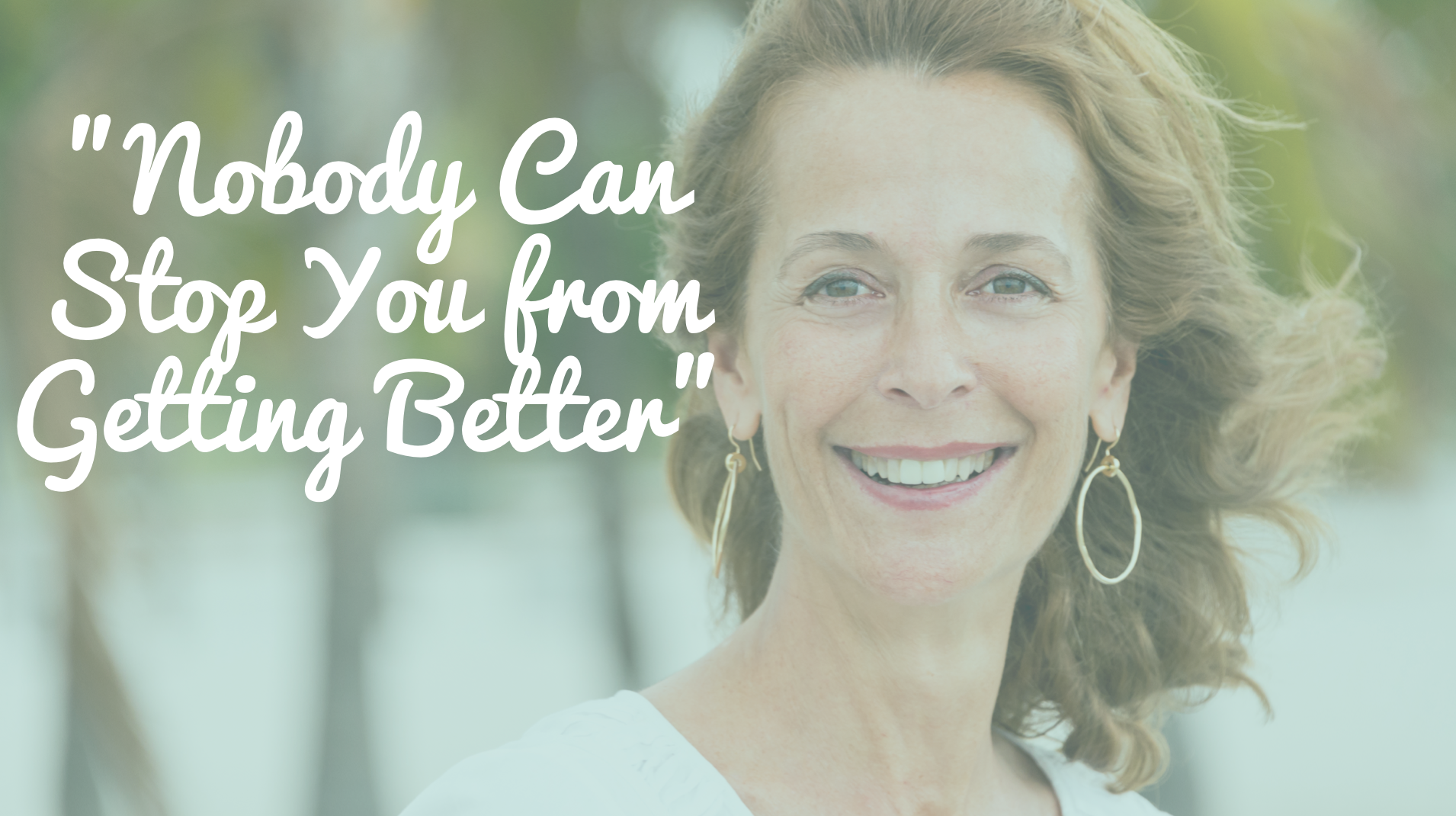
“Nobody Can Stop You from Getting Better”

Originally posted by Josh Spector on Silvernest Sep 24, 2017 4:29:57 PM

Smiling Woman

Sometimes we focus so much on getting great at something that we miss the opportunity we have to get better. But getting better is the first step to getting great, and the best way I’ve found to get better at anything is to follow this simple formula.

How To Get Better At One Thing In One Month

A formula that’s guaranteed to work.

“Nobody can stop you from getting better.” — Roseanne Barr

Sometimes we focus so much on getting great at something that we miss the opportunity we have to get better. But getting better is the first step to getting great, and the best way I’ve found to get better at anything is to follow this simple formula.

Step 1: Choose One Thing

We all want to get better at lots of things, but the first step to doing so is to focus on one.

Multitasking doesn’t accelerate improvement, it impedes it. Give yourself permission to deal with the other stuff you want to improve at a later date — your likelihood of success goes way up when you focus on one thing at a time.

Step 2: Clarify Your Motivation

Do you know why you want to get better at your one thing? The better you understand your motivation, the greater your chance of success. Clarifying your motivation before you begin also helps ensure you choose the right thing to focus on. (BTW: Need a little help getting motivated? Check out For The Interested.)

Step 3: Define “Better”

You can’t achieve a goal you haven’t clearly defined. “Better” is a tricky word. It can mean different things at different times. You need to define for yourself what it means in the context of your thing, so you can accurately measure whether you accomplish it. There’s no right or wrong definition of what better means, but if you don’t clearly define it, it’s impossible to ever achieve it. Consider what metrics or tangible evidence you can attach to it.

For example, what does it mean to be a “better” blogger? Does it mean you post more frequently? That more people share your posts? That your posts inspire more debate?

(BTW: Here’s how I approach writing better Medium posts.) It doesn’t matter what definition you choose, but in order to measure your progress you must choose one.

Step 4: Do Your Thing At Least Three Times A Week

We only get better at things when we do them regularly. You have to put in the work. Improvement comes from action, not intention. The more you do it, the better you’ll get. But in almost all cases you have no chance of getting better at anything in a month unless you commit to do it at least three times a week.

Step 5: Measure Your Results

Since you defined metrics around what it means to be “better” at your thing, you can now measure your progress as you go. It’s important to not only measure your results, but also to analyze them. The secret to getting better is found in what we learn from what we measure.

This varies widely depending on what your thing is, but your actions will result in a set of impacts you need to study. Learn from how people react to what you do, how you react to it, and figure out what works and what doesn’t.

Step 6: Develop A Hypothesis

As you measure the results of your activity and analyze them, use that knowledge to form a hypothesis about how you can improve. Improvement comes from making adjustments and those adjustments are inspired by a hypothesis based on the results of the work you’ve done to this point. It’s an iterative process — don’t feel pressured to know exactly how to improve your work. Remember, a hypothesis is just a theory. That’s why the next step is to…

Step 7: Test Your Hypothesis

There’s as much chance your hypothesis of how to get better is wrong as there is that it’s right. That’s fine. You’re in a testing phase and the valuable lessons you learn from being wrong help get you closer to being right. Don’t put too much pressure on your hypothesis to be right and don’t get discouraged if it’s wrong. Learn from it and use those findings to develop a new hypothesis to test again. Each step — in success and failure — gets you closer to your goal of becoming better. Even if it may not seem like it in the moment.

Step 8: Recognize That Better Isn’t Great

As you go through the month — doing, measuring, testing, and repeating — you may feel you’re not making progress, but it’s important not to get discouraged. Don’t confuse getting “better” with getting “great.” The way to get great is to keep getting better. And the way to get better is to do so one month at a time. You’re not going to get great at anything in a month — that’s not the way the world works.

But you 100% can get better at anything in a month. And if you follow these steps, you will.

Contributed Post.

If you like what you’ve read here, please let others know of this post, blog, and site.

And thanks for reading!  🙂