

in CBD NEWS
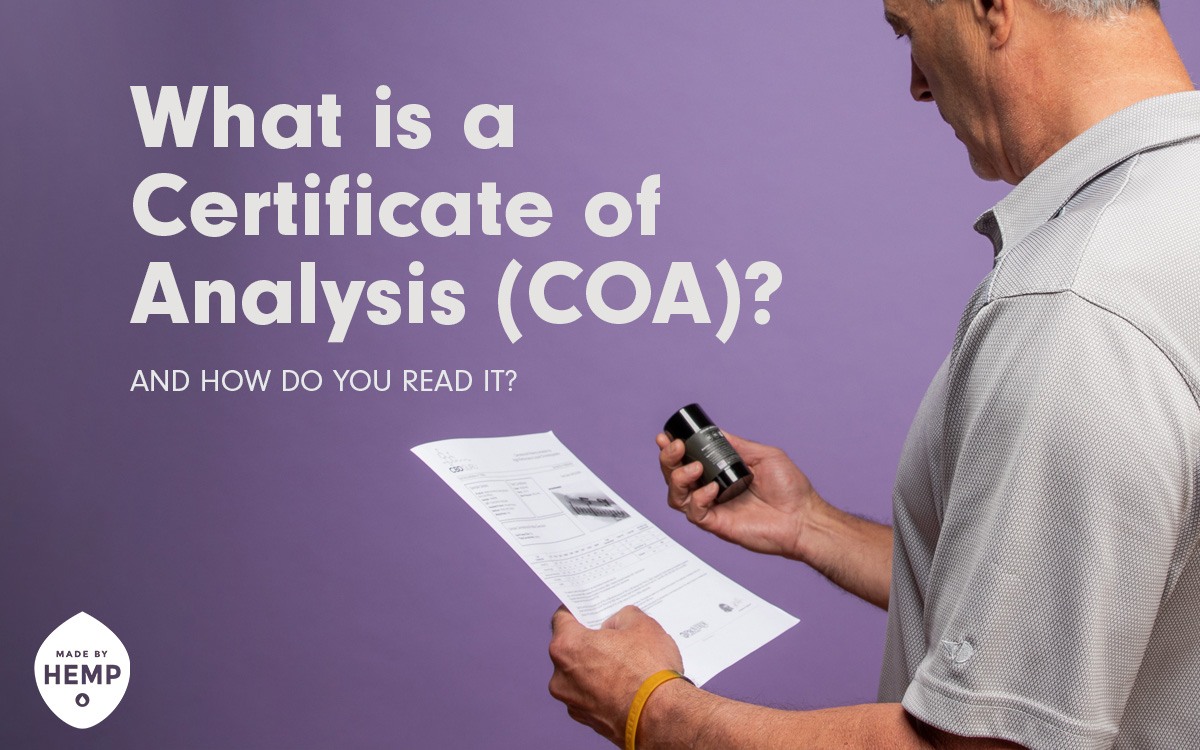
CBD is like a box of chocolates. You never know what you’re going to get unless you do a little reading. With CBD oil, it should be as easy as checking the box, but there’s an unfortunate problem of mislabeled products. Protect yourself from fake or low-quality products by doing your due diligence —always check the Certificate of Analysis. If there isn’t one, steer clear.
What is a Certificate of Analysis (COA)?
A Certificate of Analysis, or COA, is a document from an accredited laboratory that shows the quantity of various cannabinoids in a product.
Manufacturers should send every batch of every product they make to a lab for testing, to protect their customers and prove that their products have as much CBD as they advertise.
Always check the COA before using a CBD product
COAs aren’t always easy to get your hands on before buying a product. You may need to reach out to the company to request it.
However, once you receive your product, there should be a QR code on the label that you can scan and be taken to a webpage with the product’s COA. Most iPhones can scan QR codes through the regular camera, just open the camera app and point it at the QR code (don’t take a picture, just hover over the QR code) and a notification should pop up with a web address. For Android or older iPhones, simply go to the app store and search for a “QR code scanner”. There are free options to download.
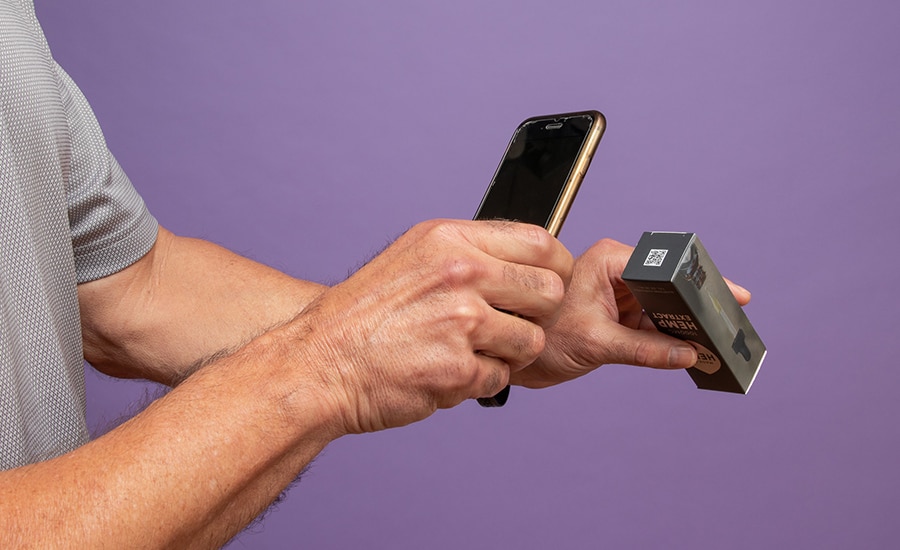
Not all states require QR codes on CBD products, but it has become a common practice anyway as reputable companies want this information to be readily available to all of their customers.
If you can’t get a COA from the manufacturer’s website, customer service, or the product label, that’s not good. A quality CBD company will always get their products lab tested. After all, a COA is as much for the customer as it is for the company to double-check the quality of their work for quality assurance purposes.
🚩 4 red flags to watch out for in a Certificate of Analysis
Once you get a Certificate of Analysis, inspect it thoroughly. Here are a few things to watch out for.
1. Too much THC
To be considered hemp oil, by law, it cannot contain above 0.3% THC. If it contains more, then it’s considered marijuana and may not be legal in your state.
Also, if your product is advertised as containing no THC, then reading the COA is a good way to verify that claim.
2. Less CBD than advertised
This one is obvious, but for good measure, we’re mentioning it. It’s very important to make sure the Certificate of Analysis reflects the advertised CBD content on your product’s label.
3. Missing cannabinoids
If a CBD product is marketed as full-spectrum, broad-spectrum, or PCR, that means it contains a variety of cannabinoids. The COA should show the product contains at least small amounts of CBDa, CBG, CBC, CBN, and/or other cannabinoids, in addition to CBD.
4. Tested in-house
When buying a car from a stranger, you don’t take their word for the condition they claim the car is in. You check it out or bring someone with you that knows what to look for.
That thought process is similar when it comes to testing CBD products. If the Certificate of Analysis came from the company themselves, meaning they tested it in-house, they might be telling the truth —but it’s not as reassuring as an unbiased professional performing the test.
Unless you really trust a company, it’s a good idea to make sure their COAs come from an accredited third-party lab. If they don’t, ask if they can provide one as they may have both available.
How to read a COA lab test
COAs are not always easy to read, and there are many different formats.
Typically, you’re going to see COAs that show the results in one of the following three ways:
- Milligrams (mg) of CBD in the full product
- Milligrams (mg) of CBD per gram (g)
- Milligrams (mg) of CBD per milliliter (ml)
Note that we are using CBD as an example, but the same goes for all other cannabinoids in the COA.
That first type of result means you don’t need to do any work or calculations, as it already shows you the total amounts of each cannabinoid in the product. However, for the others, you will need to know one thing about the product in order to make your calculations.
Before explaining those two test result formats, we should refresh our memory on units of measurements. A milliliter (ml) is a measurement of volume. So even though most liquid CBD products will show the size in ounces (oz), you can convert that. 1oz will always equal 30ml. However, grams (g) is a weight. Two 30ml tinctures will not weigh the same in grams, as the weight is affected by each ingredient in the product’s unique formulation.
MG per G
If the results show the amount of cannabinoids per gram, then you need to know the total weight of the product in grams. The weight does not include the packaging, just the product itself. Most products do not show their weight in grams on the label, so you may need to ask or check if the COA contains that information.
For example, a product weighing 25 grams with an advertised 300mg of CBD should have 12mg of CBD per gram.
MG per ML
If the results show the amount of cannabinoids per milliliter, then it’s a little easier. However, this type of measurement only (easily) works for liquids. Simply take the total milliliters of the product and multiply it by the amount of CBD per milliliter.
Liquid tinctures will always tell you their size, such as 1oz (30ml) or 2oz (60ml).
So, for example, a 1oz (30ml) tincture with an advertised 300mg CBD should contain 10mg of CBD per milliliter.
Other types of lab tests
In addition to the standard cannabinoid profile, it’s also common to find full-panel lab tests. These show the cannabinoid profile and terpene analysis, as well as checking for any molds, pests, or heavy metals that could be harmful over certain levels.
Checking COAs on Made by Hemp
At Made by Hemp, we make sure COAs are not only easy to access, but they’re also easy to read. Go to any product listing in our CBD store and click the “lab test results” link below the product title to review the results in PDF format.
Our test results are all from a third-party lab. However, our results are in milligrams of CBD per gram so, to assist with reading our COAs, the weight in grams of the product is included in the COA and the calculations are performed to immediately show you the total CBD in the product.
As a bonus, the percentage of each cannabinoid is included in the results, which is especially helpful to see that it contains 0.3% or less THC per the legal limit.
Contributed Post. Article originally posted on https://madebyhemp.com/
If you like what you’ve read here, please let others know of this post, blog, and site.
And thanks for reading! 🙂




 lifespaceblog