Aren’t those days the worst? Your alarm blares out annoyingly, the rain pours down and you open the fridge to find the milk carton is empty. Everyone experiences dreary, down days that seem unavoidable, but there are ways to turn your bad day into a positive one. When you’re caught in a negative spiral it is important to find activities that are guaranteed to trigger happier emotions inside your body. If you find yourself in these situations regularly, then consider some of the following mood lifters right now.
1.Music
Listening to some upbeat and quirky tunes can work wonders when you’re trying to lift your spirits. Expand the type of music you listen to and try out new genres here https://stockmusic.net/blog/western-movie-music/. You will be surprised at the type of songs that spark inspiration and happiness inside of you. Try to take on projects that might require music too, such as home movie making or video editing; this will help to refocus your mind and give you an instant lift in positive endorphins.
When you’re having a bad day, the last thing you want to do is talk about the embarrassing reason why you’re feeling down. However, if you can talk to someone who is neutral and understanding, you will feel a whole lot better. Call up a close friend or go out for coffee with a colleague and you will feel like a weight as been lifted.
3. Moving
Exercise releases a rush of endorphins that can instantly make you feel better when you’re having a terrible day. Even though you might want to spend the day on the sofa eating cookies and watching romantic comedies, you might find it more beneficial to head to a dance class or go for a run!
4. Cooking
The methodical and therapeutic process of cooking should never be underestimated. Even if you aren’t the greatest chef in the world, you will probably end up with some delicious dishes in the end. Use some online recipes to start of simply and then branch out to more complicated foods when your confidence has grown. A couple of hours on your own in the kitchen will give you the time and space you need when you’re having one of those days.
5. Laughing
The benefits of laughter are undeniable, so why not go out of your way to have a giggle? Watch a funny film, rewatch your favourite comedy series or call up your most hilarious friend. Forcing yourself to laugh might sound crazy, but it will be an instant mood booster.
Some of these ideas might seem pretty obvious from afar, but have you ever given them a try? The next time you wake up with negative energy, you should try a handful of the activities mentioned above. Don’t allow a bad morning to spiral into a terrible day; uplift your mood using tried and tested techniques that work for you!
Contributed Post.
If you like what you’ve read here, please let others know of this post, blog, and site.
Sometimes things are going well, and sometimes things are going badly. It’s never exactly positive or pleasurable when something’s gone wrong in your life, but it happens to all of us from time to time.
Sometimes, however, it’s not just a matter of one or two things going a bit wrong, but of an entire series of things falling apart before our very eyes, and sending us into a negative downward spiral that it can be very difficult to pull out from.
If you don’t have effective ways of escaping from these negative spirals, you can quickly end up in real trouble. But, on the other hand, when you do have techniques at your disposal for “breaking the cycle,” you can often save yourself from a lot of trouble.
Here are a few tips for rallying your forces and moving forward when you’re caught in a negative spiral.
Seek out help or guidance
At the end of the day, you are always the person who is responsible for your own circumstances, and for correcting any issues that exist in your life. If you try to rely on someone else to do the job for you, you’re in for a nasty surprise – because no one else can live your life for you.
That being said, though, there are definitely situations in life where you might not be able to see the way out of a fix you’re in, and where you need someone else’s help in order to take that all-important first step.
If you’re caught in a negative spiral, seek out help or guidance from people you can trust, or who you feel will have skill sets that can save you from a messy situation. Contacting criminal defense attorney Matthew Leyba, for example, may keep you out of jail.
Find ways to get yourself a bit of breathing space and evaluate your systems and habits
One of the most important things to do when everything is falling apart around you, is to find ways to get yourself a bit of breathing space, where you can then evaluate your systems and habits, and recover a bit from the shock and disorder that you are experiencing.
Certainly, this is almost always easier said than done. If you’re working 12 hour days, seven days a week, there’s not a lot of opportunity readily available for finding the time to catch up on your sleep, and to go for a long walk.
Still, though, whether you need to take time off work, make arrangements with your family, or anything else, it’s important to try and find time to get a sense of perspective on things, to rejuvenate, and to analyse and tweak your system and habits to begin moving you in a better direction.
Deal with any health and energy issues as a matter of priority
If you’re caught in a negative spiral you need to be able to act proactively in order to get out of it, and you also need to have enough energy and wherewithal to consistently move yourself in a different direction.
Clearly, if you are chronically fatigued and are experiencing overall ill health, it’s going to be much more difficult to try and sort things out in this way. That’s why one of your first priorities should be to take care of any health and energy issues, to the best of your ability. Try different nutritional supplements, consider consulting with medical professionals, and do what you can to get better first and foremost.
Contributed Post.
If you like what you’ve read here, please let others know of this post, blog, and site.
Aging parents can have a hard time coping when their children have left the family home. Indeed, as a parent, you can feel useless. As an individual, the sudden realization that you are not the young adult you were when you started your family can be equally painful. But the truth is that most parents will go through the empty nest experience, and it is the sign that you’ve done your job as a parent. However, don’t let the situation affect the way you think of yourself. Time has passed and now’s the perfect moment to train yourself to forget about your age.
Do you have moments when you find yourself avoiding activities and hobbies that you think are for young people? While it’s fair to say that the aging process is as much a physical as it is mental development, empty nesters who believe they are too old to do this or that are more likely to struggle with a variety of self-inflicted health issues. The truth is, age is only a number. As long as you are safe, there is nothing you can’t do, and that includes splashing out on the best RC rally car to have a play at your local park. Don’t let your mind put age in your way of fun.
Who said there’s no gym for seniors?
Just because your local gym tends to attract a young population, there is no reason why you, as an older fitness enthusiast, wouldn’t benefit from sports. In fact, keeping active is tremendously important, regardless of your age. Sports activities help not only to boost oxygen to your brain and maintain cognitive functions, but it also keeps your heart and bones healthy. More importantly, as you engage in physical activity, you learn to push the mental barriers your age would typically set for you.
You don’t need to be young to look good
Fashion is for young people, right? You couldn’t be further from the truth. Even popular platforms, such as Instagram, are filled with accounts of huge fashion influencers who are over 50. There is no need for you to stay away from the clothes you like and embrace the dull grandparents’ style. Wearing clothes that make you feel comfortable and cool at the same time is half the battle when it comes to age. You are only as old as you tell yourself to be.
Is it too late to learn something new?
Life is full of excitement and new adventures. From the moment you decide you can’t contribute or learn anymore, your mind begins to shut down. While society continues to push the idea that a young brain is quicker and more effective, there is something that most people get wrong. Indeed, the plasticity of the brain is at its best when you’re a child and up to your 20s. However, the brain develops learning patterns and a facility to make sense of new knowledge in time. In other words, if you’ve always wanted to learn a new language, you’ll never be as good at it as today.
In conclusion, age is no indication of your value as an individual. While it’s tricky to adjust to the situation as a new empty nester, you have to put yourself first and rediscover what you can do. Don’t deny yourself fun, sports, style, or even knowledge; the more you allow yourself to engage with the world, the younger you’ll feel.
Contributed Post.
If you like what you’ve read here, please let others know of this post, blog, and site.
Originally posted by Silvernest Team on Mar 12, 2017 11:33:13 PM
For many baby boomers, retirees and seniors, winding down a career, or having an empty nest can be a shock. The quiet, and lack of daily demands can take some getting used to; and it is common to feel a lack of purpose. Studies show that NOT having a purpose in life can increase illness and reduce longevity.
With 10,000 people turning 65 per day, the aging population is growing, and with greater health and vitality, a new era of “active aging” is underway. The “Third Age” of life can be one of renewed purpose via encore careers, volunteering, caring for children or meaningful travel. Science shows the best gift we can give ourselves is to have an upbeat and positive attitude about the future- whatever comes.
“It is time to expand our perceptions of aging,” said Paul Irving, president of the Milken Institute. “Having a sense of purpose literally changes everything.”
Irving went on to offer four astounding statistics on the power of positive perceptions of aging and having a purpose:
Yale University research has shown that older individuals with positive self-perceptions of aging lived 7.5 years longer.
Rush University Medical Center found individuals with a high level of purpose were 2.4 times more likely to remain free of Alzheimer’s disease.
Older adults with positive perceptions of aging were 44% more likely to recover from severe disability than those with a negative perception of aging.
Having a sense of purpose in life was associated with a 19% reduced risk for both heart disease and stroke.
“Having a sense of purpose is not just ‘nice,’ it is as important to our society as good nutrition, smoking cessation or exercise and should be a public health mandate.”
At Silvernest, we have found that active aging extends into our perceptions of our homes. An empty house is a lonely house; and bringing in a roommate creates a positive vibe. Many homeowners say they are more motivated to take on little projects, cook meals, turn the music up and actually look forward to coming home seeing the lights on for a change!
Contributed Post.
If you like what you’ve read here, please let others know of this post, blog, and site.
If you have been experiencing a low mood for a while now, you may be suffering from depression. To establish whether depression is the cause of you feeling this way, it is always a good idea to seek medical advice so that you can begin to get help through it. It is not uncommon for most people to go through times where they are feeling a little down, but usually, this passes after a few days. However, if you find that your low mood is persistent and making you lose enjoyment for things that you typically love to do, then it is a good idea to get checked out.
While sometimes people are reluctant to take medication when feeling depressed, it is still best to consult a medical professional to discuss your symptoms. Several alternative ways can potentially help when you are experiencing depression, take a look at these suggestions that you may find useful:
Mindfulness
Mindfulness is a skill that is useful to practice even when you are feeling well. Mindfulness is all about being in the present moment, observing thoughts without judgment, and letting them pass.
Using mindfulness enables us to escape from unhelpful thought patterns that drag us into the past or way ahead into the future. Mindfulness is about acceptance and being present in the moment. Mindfulness is especially useful in depression as a way of being present with yourself without judging. Mindfulness is all about accepting the thoughts that come and go without attaching extra meaning to them and allowing yourself some peace. If mindfulness is something that you are interested in trying or reading about, you will find lots of useful books and articles to help you, and even some apps that can provide a practical way for you to get started.
Talk
Depression can be an incredibly isolating illness, where you can feel that you are trapped inside your mind. Speaking to someone that you trust about how you are feeling can often be a big relief. Confiding in a friend or family member will enable you to get some support to help you through the depression and on your journey to feeling well again.
As well as speaking with a friend or family member, you may decide to talk to a professional too. A therapist will be experienced in working with people that have depression and will be able to guide you through talking about how you are feeling, asking you questions that can help you to gain some insight and understanding into your depression. Many people find speaking to a therapist beneficial, and a way to untangle their feelings and make progress towards feeling better.
TMS Therapy
Transcranial magnetic stimulation is more commonly referred to as TMS therapy. TMS therapy is a treatment for depression and was first approved for use by the Federal Drug Administration over a decade ago.
TMS therapy works via electromagnetic pulses that stimulate the part of the brain that regulates moods. No anesthetic is needed for the treatment as tms therapy for depression is non-invasive, because the treatment is applied via an electromagnetic coil that is placed on the patient’s forehead.
TMS therapy is not suitable for everyone, for example, pregnant women, or those trying to become pregnant, or anyone that has metal devices already fitted in their body. TMS therapy is most commonly used on patients that are affected by major depression that does not respond to medication.
Diet
Making a connection between what you eat and your mood levels may seem strange, but increasingly food is cited as a way to improve your mood. Research shows that certain foods may help in the battle against depression, while others can be less helpful and could potentially make symptoms of depression worse. While everyone knows the foods that they should eat to improve their physical health, identifying foods that can improve mental health may not be something that you are aware of.
There are many similarities between a diet for physical health and one for improving mental health. A healthy diet that is full of fruit, vegetables, and wholegrains is ideal for your all-round health. Cutting down on sugary snacks, red meat and processed meat is also a good idea. While firm evidence on the impact of unhealthy eating on mental health is an ongoing debate, eating a diet that makes you feel physically healthy, is likely to help your mental health too.
Exercise
Exercise can offer many benefits for physical health, but can also have a positive impact on mental health, including depression. When you are feeling depressed, it can be hard to get motivated to get out and do some exercise, but if you do manage to get active, even for a little while it can give your mood a real boost.
If you are someone that doesn’t regularly exercise, don’t push yourself too hard, as you want the exercise to be an enjoyable experience. Even an activity such as going out for a walk in the fresh air can feel like hard work when your mood is low, but you will often feel much better for doing it.
Physical activity is thought to encourage the brain to produce endorphins, which are feel-good chemicals. Exercise also acts as a tool to break free from negative thought patterns, and an opportunity to get a change of scenery and focus the mind on something else. Group exercise can be especially helpful as a way of combining physical activity with social interaction, and it’s a great way to meet new people and make new friends.
Take Care
When you are stuck in a low mood taking care of yourself is something that you may not even be thinking about. However, taking small steps towards self-care can leave you feeling a little better, and not quite so stuck in your low mood.
Don’t forget that if you are feeling suicidal or are concerned that you may harm yourself or others, it is vital to seek urgent medical attention.
Contributed Post.
If you like what you’ve read here, please let others know of this post, blog, and site.
Deadlines, demands, and danger are all common forces on a construction site. The client will have strict preferences, and you will have to meet their expectations in a range of different areas. This can make the life of someone working in this industry into a very stressful one, especially if you own or manage your own company. To help you out with this, this post will be exploring some of the aspects of this field which can cause anxiety, along with some solutions which will make it easier to move in the right direction.
The Law
When you’ve spent your life working with bricks, wood, and metal, the idea of sitting down with a pile of law books can be a depressing prospect. It’s unlikely that you’ll have had the chance to learn about this field before, and this makes it incredibly difficult to understand the rules which you have to follow. Thankfully, you can put someone else to this task, saving yourself a huge amount of time and effort in the process. To find a legal professional, you’ll need to do some research online. This can be as simple as looking for the best people in your area, and most people will be able to do this over a couple of days.
The Employees
Having people work for you is an exciting prospect, but it can also come with a lot of dread. You will be responsible for these people, providing them with work and a safe environment to do it in. If you fail to meet the requirements which are in place, you could find yourself struggling to keep your business moving forwards, with your team getting frustrated if they are treated badly. Government operations, like the Construction Industry Scheme, are designed to make the lives of employer’s easier. Not only can options like this handle complicated tasks for you, but they can also offer advice, giving you the chance to follow a path which works properly for you.
The Money
Building work is never cheap, and it usually takes a long time to complete. This makes working in this industry risky for some, especially when they don’t charge for a job until it is done, as you may not get paid for the time, effort, and investment you’ve made. Overcoming this is nice and easy, with a contract being the very best way to keep your clients in order. If you’re able to get long-term contracts with governments or other organisations, your business will have the chance to become far more secure, as these sorts of jobs don’t tend to disappear unless you don’t uphold your side of the bargain.
With all of this in mind, you should be feeling ready to take on the challenge of taking the stress out of the field of construction. A lot of people struggle when they enter fields like this, finding it hard to know what they need to do to escape the pressure. Of course, though, it doesn’t have to be this way, as long as you’re willing to put some effort into it.
Contributed Post.
If you like what you’ve read here, please let others know of this post, blog, and site.
In our modern, fast-paced world, stress is becoming a very common component in our everyday lives. It has become so common, in fact, that we no longer seem to notice stress until it has compounded into something bigger and has started affecting our health. Stress, or rather, stress hormones (a primary stress hormone like cortisol), are released into the body to trigger our “fight or flight” response. In dire situations, these hormones help elevate our energy supplies, increase the concentration of glucose in our blood, and even help our brain use glucose optimally for quicker decision making. However, long-term activation of the body’s stress system could cause a host of health problems — anxiety, depression, heart disease – to name a few.
Therefore, it is important we learn of ways to relieve ourselves of stress. Below are five simple ways to relieve stress:
1. CBD Oil
You’ve probably heard of CBD quite often this whole year. There is good reason for that. Aside from its uses in alleviating the symptoms of epilepsy, it is also being used as a natural means of reducing anxiety and a great way to relieve stress. This is because all mammals have an endocannabinoid system. This is a network of CBD receptors along our central nervous system. These receptors react to CBD by fixing imbalances, strengthening our immune system, and relieving symptoms of stress and anxiety. So a couple of drops of CBD oil every day might just be a great way to help relieve stress.
2. Meditation
If you are looking for a very cheap way of reducing stress without taking anything, meditation is the way to go. Meditation has been known to help ease stress and anxiety by focusing our attention to emptying our mind and breathing deeply. Not only will this help you relax, but it could also re-energize you to help you face the rest of your day with a bit more calm. If you find yourself stressed by too many meetings or an impending deadline, take a few minutes to center yourself, empty your mind of any thoughts, and breathe.
3. Exercise
Physical activity causes our body to release happy hormones like dopamine and serotonin. To people who have experienced what is called the “runner’s high”, this is actually the rush of endorphins released by your body as a response to running. Endorphins help our body reduce stress by helping our body overcome pain, and regulate our sleep. The stress hormone cortisol actually reduces the production of happy hormones in our body which will lead to more stress for us. Exercising would help build these hormones back up in our system.
4. Reduce caffeine
We all have a caffeine threshold. Caffeine is known to help keep us awake and give us that boost of much-needed energy, especially in the mornings when all we want is to go back to sleep. However, too much caffeine can contribute to anxiety which in turn causes stress. It could also cause heart palpitations, cold sweat, and some digestive upset when you take too much caffeine. So if you find yourself getting anxious after your second or third cup of coffee, it might be a good idea to skip that cup of joe and maybe have something with lower caffeine levels. Perhaps a nice low caffeine tea, or, dare we say, some decaf coffee?
5. Socialize
Spending time with friends and family is a great stress reliever. No matter how introverted and socially averse you are, there is always someone you prefer spending your time with. And for those of us who are extroverted, being with people is an energizing experience. Laughing and having an enjoyable time with the people you love will help you relax more, and forget about your woes. In women, spending time with family and children helps in releasing oxytocin, a natural stress reliever.
No matter your station in life, stress is unavoidable. Keeping these five tips in mind will help you in managing or maybe even relieving stress. And in turn will help you enjoy life more, avoid health issues, and even develop a healthier relationship with yourself and with your social circle.
In life, whether you realize it or not, you often live on autopilot. And it’s for this very reason that you may find that you don’t actually realize that you’re doing it. However, this can be quite dangerous. Because there are always going to be those things that prove to be a little risky in life. And these are the things that you ought to be a little more mindful of. But what are they? Let’s take a look.
Lifestyle Choices
First of all, we have your lifestyle choices. It’s easy to feel as if health problems come your way because they’re programmed to. But that may not be the case. Sometimes, the lifestyle choices we make with regards to food, exercise, and toxins, can contribute. So this is something to be more mindful of.
Carelessness
As a step on from, we have carelessness. Again, it’s easy to live on the conveyer belt and not overly think about our actions. Yet when we’re careless and not thinking, we’re at outmost vulnerable and at risk of harm. So it’s important to be alert and have your whits about you.
Everyday Hazards
And finally, there are those things in life that we’ve come to see as normal, yet can be very dangerous indeed. Like driving! There are so many risks and fatalities with driving, as you can see in the infographic below, that it’s important not to forget about this! So you need to be more knowledgeable on the risks and statistics, so that you’re not putting yourself or others at risk.
Anxiety is a normal coping mechanism; however, in excess, it can be detrimental. More than just a situational response, anxiety disorders are characterized by a persistent and oftentimes irrational dread of everyday situations which can interfere with daily activities.
Forty million U.S. adults are affected by an anxiety-related disorder; however, the prevalence of these disorders should not diminish their impact.
Excessive anxiety is a central symptom of several neuropsychiatric disorders including generalized anxiety disorder (GAD), panic disorder (PD), post-traumatic stress disorder (PTSD), and obsessive-compulsive disorder (OCD). Anxiety is a complex disorder that can develop through various factors including genetics, brain chemistry, personality, and life events.
Anxiety and Emotional Response
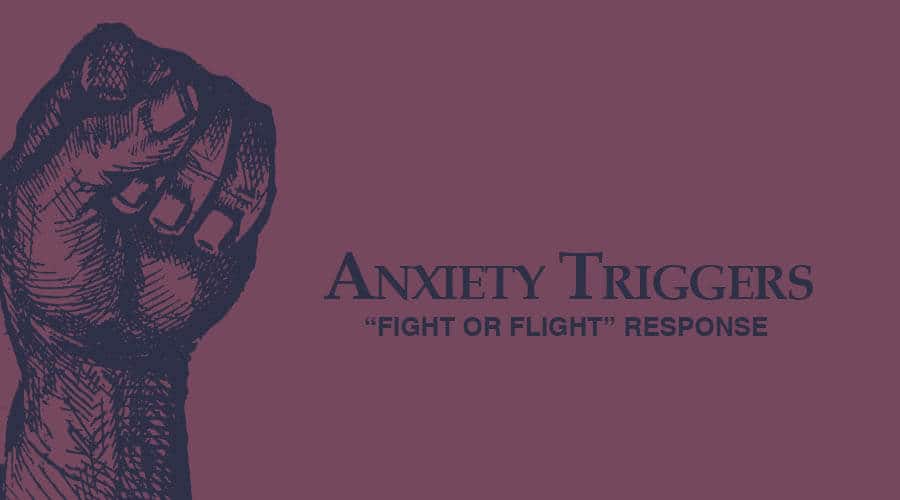
Anxiety is our body’s response to an emotional situation. Biologically, anxiety activates our “fight or flight” response to warn us of potential threats.
During such time, norepinephrine and cortisol flood our system to boost to perception, reflexes, and speed. These chemicals increase the heart rate, blood flow to the muscles, and air flow. With chronic anxiety, the response is never deactivated, and the physical and emotional effects of anxiety remain.
Anxiety and the Endocannabinoid System
The endocannabinoid system (ECS) plays an integral role in regulating emotional response.
Specifically, the ECS supports nerve activity that determines our response to emotional or aversive events.
An Introduction to the ECS
As discussed in a previous blog, the endocannabinoid system is a biological system responsible for maintaining homeostasis. The ECS is composed of endocannabinoids, degradative enzymes, and cannabinoid receptors. Endocannabinoids such as anandamide (“the bliss molecule”) and 2-arachidonoylglycerol (2AG) are synthesized, or created, by our body on demand in response to an imbalance. They interact with the cannabinoid receptors to direct the body back to proper functioning.
CB1 Receptors and Anxiety
CB1 receptors, which are primarily located on nerve endings, are one of the two major cannabinoid receptors.
Studies have found the activation of the CB1 receptor produces anxiolytic (anti-anxiety) effects.
When discussing conditioned fear, the effect of CB1 receptor activation is complex; however, CB1 receptor activation can reduce fear and prevent the activation of existing memories from the past. Additionally, CB1 receptor activation protects against the adverse effects of chronic stress, which can lead to anxiety. For this reason, CB1 receptor activation has been studied for anxiolytic drug development.
Endocannabinoids activate the CB1 receptor; therefore, a higher level of endocannabinoids can be beneficial for those with anxiety-related disorders. Additionally, chemicals that inhibit the FAAH enzyme from breaking down anandamide increase endocannabinoid availability and are also being studied for their anxiolytic effects.
Living with Anxiety
There are many ways to manage anxiety; however, less than 40% of those with an anxiety disorder seek treatment. Still today, there is a stigma surrounding mental illness that discourages those struggling from seeking help. We can help end the stigma of mental illness by having open conversations about mental health, encouraging mental health education, and showing compassion to those with a mental illness.
If you or a loved one is struggling with an anxiety disorder, we encourage you to learn more about the disorder and the options for treatment.
Well, here you are: The last kiddo has left home and you’re feeling pretty blue. Maybe you’re worrying all the time. You’re probably a little lonesome (or a lot). You may feel like it, but you are not alone.
The Empty Nest Is Actually Full—of Emotions
According to GoodTherapy.org, empty nesters may experience insomnia, anxiety and/or panic—as well as feelings of extreme grief, isolation/loneliness, guilt and purposelessness. They may even lose interest in activities they once enjoyed. Psychology Today notes that “…parents often struggle with a profound sense of loss, not just because they miss their child, but because their very identities have been significantly impacted.” In other words, if your parenting role has changed so dramatically, who are you?
In two-parent families, empty nest syndrome is at least a team experience—one partner can offer support and empathy when the other is struggling. For divorced, widowed or single parents, however, there may unfortunately be an even greater sense of isolation and loneliness.
If you are struggling with empty nest syndrome, the good news is you are not alone. Most parents experience at least some of these feelings in varying degrees. Here are five suggestions for coping with empty nest syndrome and finding your groove again.
Five Ways to Cope with Empty Nest Syndrome
1. Participate in Activities That Include Others.
Whether you’re an introvert or extrovert, we all need friends. If you’re already involved in a community group, don’t stop now! If you’ve been too busy, go ahead and sign up for those art classes, start a band, look into university extension programs, or join a new class at the gym. The excitement and energy of taking up a new hobby or learning something new is a real balm for feelings of loss, and being around other people can help stave off social isolation.
One of the rewards of parenting is the feeling of being important to another person. While nothing will ever replace the love between a parent and child, you can find some fulfillment in helping others. Look for a volunteer organization that aligns with your values and sign up! Offer to read books at a nearby school, or hold babies in the NICU at your local hospital. Sign up to work at a local food bank or community garden. Or use your skills to help others—knit blankets for hospital patients, teach home repair skills… the possibilities are as endless as your imagination.
3. Embrace a New Adventure.
If your time and budget allow it, why not enjoy all that traveling you put off during the busy parenting years? Some empty nesters even decide to sell their homes and travel full-time! While that might not be the right choice for you, having a trip to plan and look forward to (and then enjoy) can be very therapeutic.
4. Embark On an Encore Career.
If you’ve reached retirement age, becoming an empty nester might inspire you to re-enter the working world. Encore careers can take on many forms — a coaching or consultative role in your former industry, professionalizing one of your skills (such as giving art lessons), or even joining the staff at a nonprofit. These “second-act” jobs can be a great way to recharge your spirits, stay engaged and extend your retirement income.
5. Discover the Benefits of Homesharing.
Sometimes an empty nest means you’ve got unused space in your home. Homesharing offers a wonderful way to put that space to work and have some company around the house. In homesharing, your renter (or “housemate” pays rent or does household chores (or a combination of the two) in exchange for living space.
Some homeowners find housemates by asking around among friends and neighbors, or by advertising in the community, online or on social media. Silvernest uses unique roommate-matching technology and other tools to make homesharing simple and worry-free. We’ve helped build happy homesharing agreements between people of similar ages or across generations.
There’s Hope Ahead.
Those “empty nest” feelings are normal and natural. While you’ll always miss having your kids around, the most intense emotions usually ease with time. However, if you find yourself too depressed or anxious to fully participate in your life as you once did, please seek out professional support. A trained therapist or, if need be, psychiatrist can help you work your way through this transition to a brighter future.
Contributed Post.
If you like what you’ve read here, please let others know of this post, blog, and site.



















 lifespaceblog